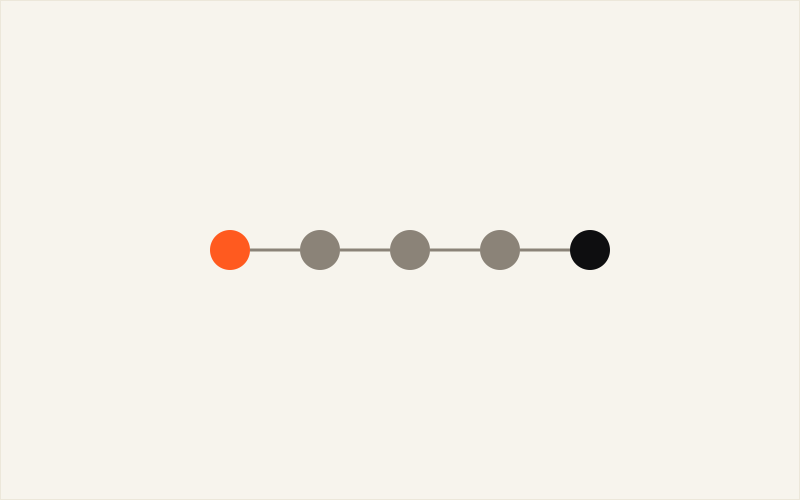
1. The brief
Understanding the business, its values, its target audience and its ambitions: the most decisive step for everything that follows. A rushed brief almost always leads to more revisions later on, because the first proposals miss the mark from the start.
2. Research
Studying the industry, competitors, and relevant graphic trends, without copying anyone. This step helps identify what already exists, the better to stand apart from it rather than accidentally proposing a logo too close to a competitor's.
3. Creative exploration
Developing several distinct graphic directions, not simple variations on a single idea. Good creative exploration proposes genuinely different directions, to give the client a real choice rather than the illusion of one.
Ready to start your project, step by step?
See pricing4. The presentation
Presenting the concepts to the client, with an explanation of the thinking behind each proposal. That explanation matters just as much as the visual itself: it lets the client understand why a particular shape or colour was chosen, rather than judging on aesthetic gut feeling alone.
5. Revisions
Adjustments to the chosen direction, until we reach a result that truly fits the project. This is a collaborative step: the client refines their feedback, the designer adjusts the proposal, until we converge on a version that satisfies both sides.
6. Technical finalisation
Clean vectorisation, variants (colour, black and white), and preparation of the different formats. This is a less visible technical step for the client, but it's essential to guarantee a logo that's usable across every future material: see the different logo formats, and what they're really for.
7. Delivery
Handing over the final files, with usage rights clearly specified. This is the step that formalises the client's actual ownership of the logo: see understanding a designer's quote, copyright and rights transfer to understand why this point matters so much.
Why skipping a step costs you
A logo delivered in a few hours through an automatic generator skips nearly all of these steps. The result may seem good enough at the time, but it often lacks consistency with the client's actual business, for want of a real brief, real research and real creative exploration beforehand.
How long each step takes
The brief generally takes a day to a week (exchanges included), research and creative exploration a few days, and revisions vary depending on how many rounds are needed. In total, count on 4 to 15 business days for a complete project: see how long it takes to create a professional logo for the detail of these timelines by package.
What sets a rigorous process apart from a risky shortcut
Every step that's skipped has a cost, even if it's invisible at the time: without prior research, the risk of proposing a logo too close to a competitor's rises; without real creative exploration, the client doesn't get a genuine choice between different directions. These shortcuts are often paid for later, in the form of an early redesign.
Frequently asked questions about logo design steps
Can the research step be skipped to move faster?
It's not advisable: this is exactly the step that prevents accidentally proposing a logo too close to an existing competitor already on the market.
How many rounds of revisions are usually included in this process?
It depends on the package chosen, generally between 1 and 3 rounds of revisions depending on the service level.
What happens if none of the first proposals work?
A good process includes going back to the brief to adjust the direction, rather than multiplying proposals blindly without understanding the initial disagreement.
How long does the whole seven-step process take?
Generally count on 4 to 15 business days for a complete project, depending on the package chosen and the number of exchanges needed.
My take as a designer
These seven steps aren't a formality I apply mechanically: each one has a precise function that I've seen, in practice, make a real difference to the final result. Skipping the brief or the research, even to save time, almost always ends up costing more in revisions.
A rigorous process doesn't slow a project down: it avoids the costly back-and-forth that actually does slow down a project that was poorly framed from the start.
To sum up
Professional logo design follows a structured seven-step process, from the initial brief to delivery of the final files with usage rights.
Each step has a precise function, and skipping one (research, creative exploration) risks results that are less consistent with the client's actual business.
Faced with a logo delivered in a few hours through an automatic generator, ask yourself which steps of this process were actually followed.